
Macro Cycle
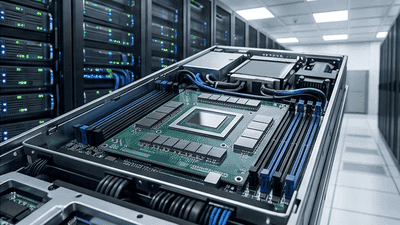
Intel’s Glass Substrate Pivot: A Foundry Comeback Strategy or a Packaging Play?
Intel’s glass-substrate strategy is primarily a packaging opportunity that could strengthen its foundry business—not a substitute for rebuilding competitive wafer manufacturing. That distinction matters because packaging can attract customers and improve system performance without automatically proving that Intel’s process technology, manufacturing economics, or external foundry model has recovered.
Global Semiconductor Output to Cross $1 Trillion in 2026: Morgan Stanley and SEMI Data
The trillion-dollar semiconductor milestone is no longer merely a forecast. On October 5, 2026, the Semiconductor Industry Association reported that global chip sales had already exceeded $1 trillion through August. August sales reached $159.7 billion, and the association said full-year sales were projected to exceed $1.6 trillion. These are dollar-denominated sales figures—not a measure of physical chip output.
The $4 Trillion Data Center Buildout: Where Semiconductor Spending Concentrates
The semiconductor money in the data center build-out concentrates in four places: accelerated compute, high-performance memory, networking, and the manufacturing technologies needed to integrate them. Power management, storage, and host processors capture additional demand, but the spending is not distributed evenly across the chip industry.
Why the Fed’s Rate Hike Didn’t Kill Chip Stocks: The AI Capex Demand Anchor
Higher interest rates are a headwind for semiconductor stocks, but they are not a mechanical sell signal. When expected earnings improve fast enough, the market can absorb a higher discount rate without abandoning companies positioned at the center of a major investment cycle.
Yongding’s $1.13B Laser Chip Orders: The Hidden Supply Chain Behind AI Infrastructure
The most important correction comes before the investment thesis: Yongding’s disclosed laser-chip orders total approximately RMB 1.133 billion, not US$1.13 billion. The July 29, 2026 announcement identified a RMB 542 million order and a US$87 million order, translated at approximately RMB 591 million. Both amounts included tax. The combined value was roughly US$167 million at the exchange rate implied by the announcement.
Chip IPO Wave in 2026: What CXMT’s $33B Listing Bid Means for Global DRAM Pricing
CXMT’s public-market funding strengthens its ability to challenge established DRAM suppliers, but an IPO does not immediately create cheaper memory. The pricing effect depends on how quickly capital becomes qualified output—and whether that output arrives before demand weakens.
Alphabet’s Negative Free Cash Flow and AI CapEx Surge: The Semiconductor Spending Paradox
Alphabet’s negative quarterly free cash flow is not evidence that its operating business stopped generating money. It is evidence that infrastructure investment overtook that cash generation. For semiconductor suppliers, the same spending that squeezes Alphabet’s near-term cash flow can create substantial revenue opportunities.
OpenAI’s $73B Valuation and TSMC Self-Designed Chip: A New AI Vertical Integration Era
OpenAI’s move into custom silicon signals a new phase of AI integration: model developers increasingly want influence over the hardware that determines their costs, capacity, and product performance. But this is integration through partnerships, not a plan to own every layer of semiconductor manufacturing.
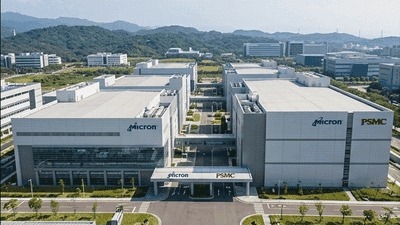
Micron’s $1.8B PSMC Acquisition: Inside the Taiwan DRAM Capacity Land Grab
Micron’s $1.8 billion Taiwan deal is not an acquisition of PSMC itself. It is the purchase of PSMC’s P5 manufacturing site in Tongluo, Miaoli County—a transaction that gives Micron existing cleanroom infrastructure and a route to expand advanced DRAM production faster than starting entirely from scratch.
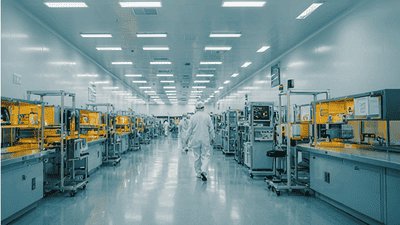
SK Hynix’s $15B Fab Bet: Why First Cleanroom Move-Up to February 2027 Matters
Three months can be a long time in memory manufacturing. Bringing a cleanroom forward from May to February 2027 gives SK hynix an earlier opportunity to install equipment, develop processes, and prepare capacity for customers. It does not guarantee three additional months of commercial shipments, but it can move the entire learning curve forward.